The studio as an extension, not a destination
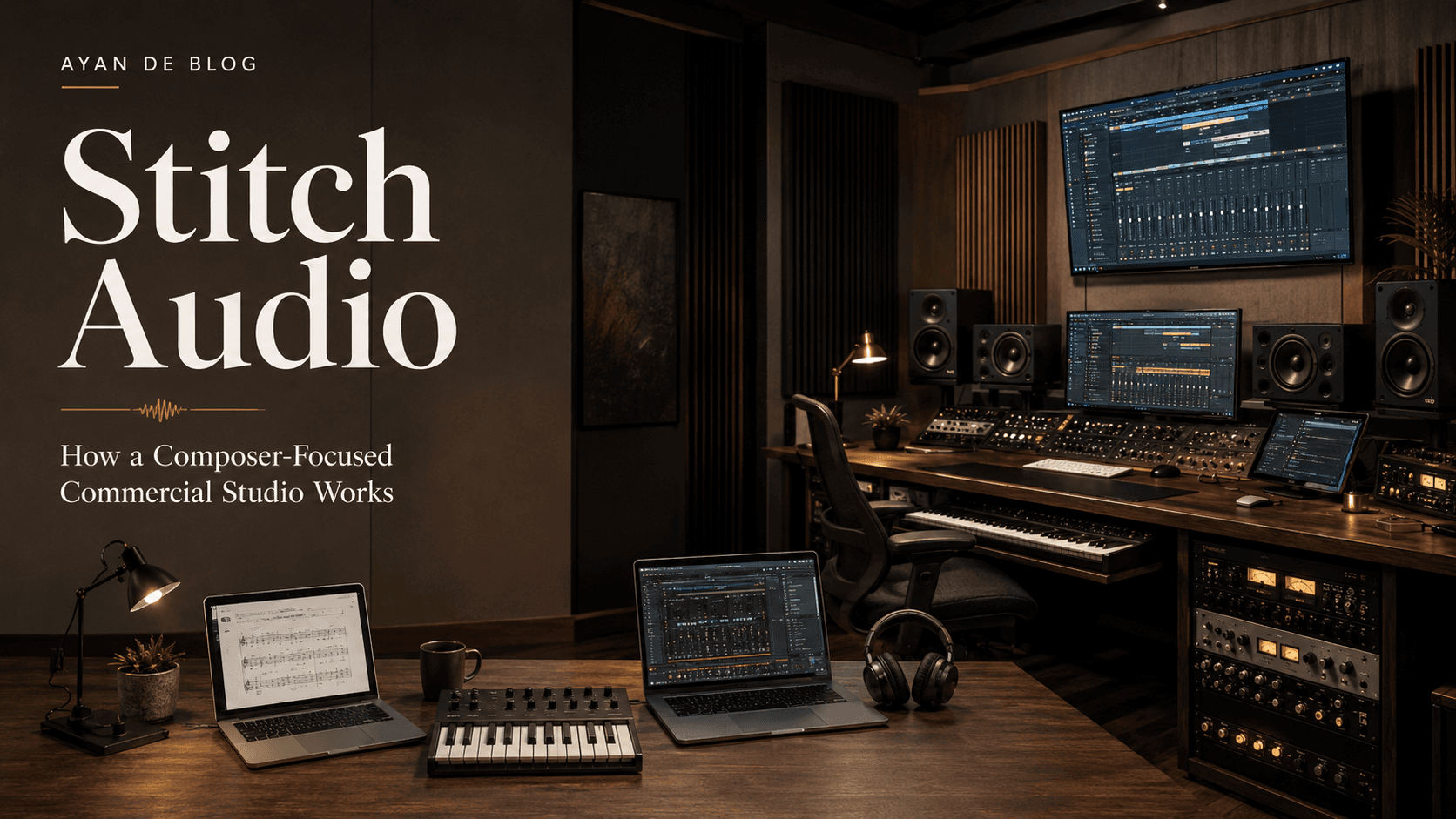
I built Stitch Audio around a simple observation: most working composers already have a studio. They have a computer they trust, a preferred DAW, carefully organised templates, instruments, libraries and years of muscle memory. Asking them to abandon that environment when a project becomes serious is often counterproductive. A composer-focused commercial studio should therefore behave less like a separate facility and more like an expansion port for the composer's existing practice.
That changes the role of the room. Instead of forcing every job through a house workflow, the studio helps a project become larger without becoming less personal. A cue can begin on a laptop at home, arrive at Stitch for live recording, editing, mix decisions, immersive preparation or final delivery, and return to the composer without its internal logic being broken.
Connection is part of the creative design
The practical work begins before anybody presses record. We first establish how the composer's system communicates with ours: session format, sample rate, naming, timecode, stems, MIDI, tempo maps, picture versions, alternate mixes and delivery requirements. None of this is glamorous, but it is what allows creative decisions to survive movement between rooms.
A connected studio can receive the project in several ways. Sometimes the composer's laptop remains the centre of the session and our room becomes its monitoring, recording and routing environment. Sometimes we transfer the session to a house machine while preserving plug-in choices and automation. On larger projects, multiple systems can share work: one handles the main DAW, another hosts instruments or picture, and another manages immersive rendering or specialist processes. The goal is not technical complexity for its own sake. The goal is to make the complexity disappear from the composer's experience.
Why composer-focused rooms need modularity
A composer may need a writing room in the morning, a small ensemble space in the afternoon and a critical mix environment at night. A rigid studio sells fixed rooms by the hour. A modular studio sells the right amount of infrastructure for the stage of the work.
At Stitch, the most useful question is not, 'Which room have you booked?' It is, 'What does the music need today?' That might mean connecting a keyboard and orchestral template to a larger monitoring system, opening the room for performers, using external processing selectively, preparing stems for post-production, or moving into Dolby Atmos once the stereo architecture is stable. The commercial value is in access to capabilities that are expensive, space-intensive or difficult to maintain at home.
The human layer
A composer-focused facility also needs people who understand unfinished music. A recording studio can be intimidating when every rough idea is treated like a final performance. Composers need a room where sketches, temporary sounds and imperfect cues can be discussed without judgement. The engineer must understand arrangement, orchestration, picture, dynamics and the difference between a production problem and a composition problem.
My role is often to translate intent into a practical next step. A composer might say that a cue feels small, emotionally distant or unable to carry the scene. The answer may not be a louder master. It may be a different register, a better recording plan, a more useful ambience, fewer competing layers or a change in perspective. The studio becomes valuable when it can connect technical action to musical purpose.
A studio that can travel with the project
Modern work rarely moves in a straight line. Sessions return after edits, picture changes, approvals and new performances. For that reason, documentation and recall are as important as microphones and monitors. Versioning, session notes, stem maps, routing records and delivery logs allow a project to leave and re-enter without confusion.
This is the larger idea behind Stitch Audio: a commercial studio should not interrupt the ecosystem a composer has spent years building. It should give that ecosystem more space, more precision, more listening perspectives and more reliable delivery. When it works properly, the composer does not feel that they have handed the music away. They feel that their own studio has temporarily grown around them.